
44h 41m (2,635 mi) via Alaska Hwy—Part 2, Canada
More travel sketches from a long drive north.
―
An eagle crouches on a frozen deer carcass, tearing into winter’s remains alongside the Icefields Parkway.
This 232-kilometer stretch through Alberta links Lake Louise in Banff National Park to the town of Jasper. The route cuts through high alpine passes, waterfalls tangled in ice, and turquoise glacial lakes.
Before leaving, we did the math twice to make sure we had enough gas to get from one end to the other. The fuel gauge holds it breath.
Near Jasper, a husky stands alone on a frozen lake, its grey-blue coat almost stitched into the ice. I scan for the owner, assuming someone must be ice fishing nearby. But there is no owner, because that is no dog.
“Wolf!” I yell. “Grey wolf!”
By the time the Wolf and Sasha turn to look, it is already gone. The lone predator vanishes back into the spruce-rimmed ice.
We turn off onto a dirt road toward the gas station in Nordegg, where fuel is prepaid in liters and the numbers spin too fast for me to translate.
Antlers over Shell—
sun pools in the roadside mud
like spilled copper light.
A sign for Sunchild First Nation slips past the windshield. Up here, the history of the land’s original peoples feels less entombed than it does back home—not battlefields sealed behind museum gates, but living communities patchworked into the contemporary landscape. Here, there are bridges over roads for wildlife to safely roam.
Deer ricochet wild
through twilight on the Range Road—
tails strike like matches.
Nearly every truck carries Starlink on the dashboard now: white squares tilted toward the heavens, harvesting signal from the open sky. They tether the isolation of rural Alberta to invisible constellations of machinery overhead.
Somewhere beyond them drifts Artemis II, carrying human beings farther into space than anyone has traveled in half a century. Another last frontier. The news says the toilet onboard isn’t working.
Oil wakes early—
breakfast starts before daylight
for the gasfield men.
The Days Inn in Drayton Valley feels like one of those hotels where it is always nighttime: labyrinthine hallways, no windows, doors opening onto nowhere.
I am starving, so I fill a Styrofoam bowl with Froot Loops from the breakfast buffet, which has already been carefully laid out, and quietly steal tomorrow morning’s milk. It is nearly midnight. A stuffed dinosaur and a scattering of Hot Wheels lie abandoned on the ancient carpet, its pattern faded by decades of boots and winter salt. The man at the front desk wears a turban and speaks with a kindness that makes the whole strange place feel briefly less lonely.
A laminated note in the bathroom politely asks guests not to wipe soiled hands on the white towels.
In the morning we take the truck to Young’s Garage to check the engine light that flicked on somewhere in BC. Nothing serious. Still, the Wolf asks the mechanic about the shocks—his pet obsession for the last thousand miles, the thing I’d started to think he was harping on just to needle me. But he’s right. The shocks had been installed backward in Denver and one had rubbed a small hole into the driver’s side wheel well. I stand there feeling vaguely indicted while a gentle mechanic with a husky mix pads around the shop floor. An hour later, the shocks are set properly and we are back on the road again. The Wolf grins.
Oil and natural gas country is vast—the overlooked middle of things. These are the places no one photographs: logging roads disappearing into spruce, mining towns held together by diesel and shift work. In Dawson Creek, the sign marking the start of the Alaska Highway sits awkwardly inside a roundabout. We circle twice so the Wolf can lean out the window and snap a photo.
The Peace Region stretches north in long industrial corridors. Heavy machinery rusts beside gravel lots. A frozen lake with a single bench faces the ice as though someone once intended to stay awhile. At the roadside café in Pink Mountain, Wi-Fi costs two dollars.
A heavyset man opens his laptop with the resignation of someone settling in for the entire afternoon. The Wolf buys a “Feces of the Wild” sweatshirt for his fourteen-year-old nephew back home in New York.
Billboards for Jesus reappear for the first time since Montana. We fill the truck from freestanding fuel tanks on the honor system: two Canadian dollars a liter. Somewhere far away, the war in Iran grinds on. Up here, the pumps click slowly beneath a white northern sky.
Gas plants in spruce woods—
no pumps for a hundred miles,
only extraction.
This is a land that gives more than it keeps: oil, gas, timber hauled south in endless quantities while the towns themselves remain sparse, provisional, half-lit at the edges of the boreal.
More darkness. More oil and gas plants. The horizon collapses into plowed snowbanks and the double yellow line. Headlights appear ahead, bright enough that I dim my beams. I’m going nearly seventy, so they must be too. I wait for them to pass. The lights neither brighten nor approach. Minutes seem to stretch. Distance itself feels distorted by the dark.
Frozen rivers wait—
beneath the ice, water breaks
through paused movement’s skin.
Sometime after eleven, I pass an oil tanker. He doesn’t like that. The truck swings into the left lane and accelerates uphill, but I keep my foot steady and hold my line. Eventually he drops back behind me. The small contest sharpens my attention while the Wolf sleeps beside Sasha, whose curled like a comma, in the passenger seat. I put on early ’00s alternative, inch the volume louder, and sing softly to myself. They don’t stir.
Finally, Fort Nelson appears on the horizon blazing like New York City. The lights are shockingly invasive. Until now, we were the light pollution.
The next morning, a woman smoking outside a gas station near the Yukon border comes over to explain the pumps. Inside, the shop feels preserved from another decade: boots drying beside a woodstove, a cast-iron skillet blackened with use, the air thick with cigarette smoke. Five-dollar stickers of bears and Klondike men curl for sale on dusty shelves beside ancient bags of chips.
On the television, Artemis II bobs in the Pacific off San Diego, the capsule bright against the water like a red-capped mushroom.
Warnings about bears line the boardwalk at Liard River Hot Springs Provincial Park: electric fences, stories of an infamous mauling, repeated reminders not to linger alone. For the first time on the trip, I carry bear spray on my hip.
The Wolf does not bathe. He stays behind to walk Sasha, perform burpees against a picnic table, and talk with a young man living out of his truck with a whitewater kayak strapped to the roof. He is heading north to guide in Seward. “It’s the season for migration,” the Wolf says later. “For salmon and guides.”
The water is impossibly soft and clear. White stones feathered by sulphur mark the mouth of the spring—the seat of the kami.
Floating there, I feel more Japanese than usual. I think:
Heaven is onsen—
everyone I love drifts
beneath rising steam.
Clouds pass overhead while I listen to my heartbeat moving through the water, through my body, into the pool itself. Snowmelt rinses through my hair. I never want to leave.
Google often enough mistakes the entrances of unmarked oil and gas plants for commercial gas stations.
We turn into one at dusk, just after nine. The pavement gives way to a kind of lunar mud tundra, and the truck lurches forward with a grey Ford pickup close behind us. Ahead, a row of industrial cylinders points toward the sunset like rockets on a launchpad. Across from them stands a line of prefab grey double-wides: workforce housing at the edge of the world. Outside each unit sits a pickup nearly identical to mine.
The Wolf says:
“We could be them too—
same truck in the parking lot,
same mud on the doors.”
I reply:
“No, we barely pass.
They wake up here every day.
That’s the difference.”
Another wolf just outside Teslin, just before the hill leading down to the grated bridge over the endless lake:
Wolf beside the road—
sunset holds it one moment,
then forest takes it.
In Teslin, a chain-smoking Irish woman in a nightgown, pink fleece vest, and pink rain boots stands outside the motel office, already upset about Sasha barking.
“The guy who stayed in your room last night went out,” she says. “His dog barked and barked. I cannot do it again.”
All night, Sasha is quiet but semis idle outside the shabby motel beneath a flickering neon Bigfoot sign. Eventually the engines flatten into white noise, as steady as surf.
By morning, we are hungry again. Another heartland breakfast: eggs for me, eggs and sausage for the Wolf. Overpriced, perfect.
Whitehorse at last. A northern metropolis with almost no visible trace of the gold rush except in the names preserved by those who still care to remember it. The city feels unexpectedly modern and streamlined: one broad main street lined with gift shops, outfitter windows, and a kayak store overlooking the frozen Yukon River.
Rainbow flags hang soft—
espresso and pastries glow
under yellow lights.
Something in the Wolf brightens here the same way it did back in Montana at the sight of Custer’s battlefield. The old mythology catches him again—only this time it is less about cowboys and cavalry than the North itself: stampeders, bush pilots, river men, adventure novels with cracked spines and maps tucked into the front matter.
“Adventure novels start here,” he says, grinning like a little boy.
He wants photos with the murals and the prospector-and-dog statue, eager to gather evidence that we have crossed into the territory of legend. The bust of Jack London, though, he can do without.
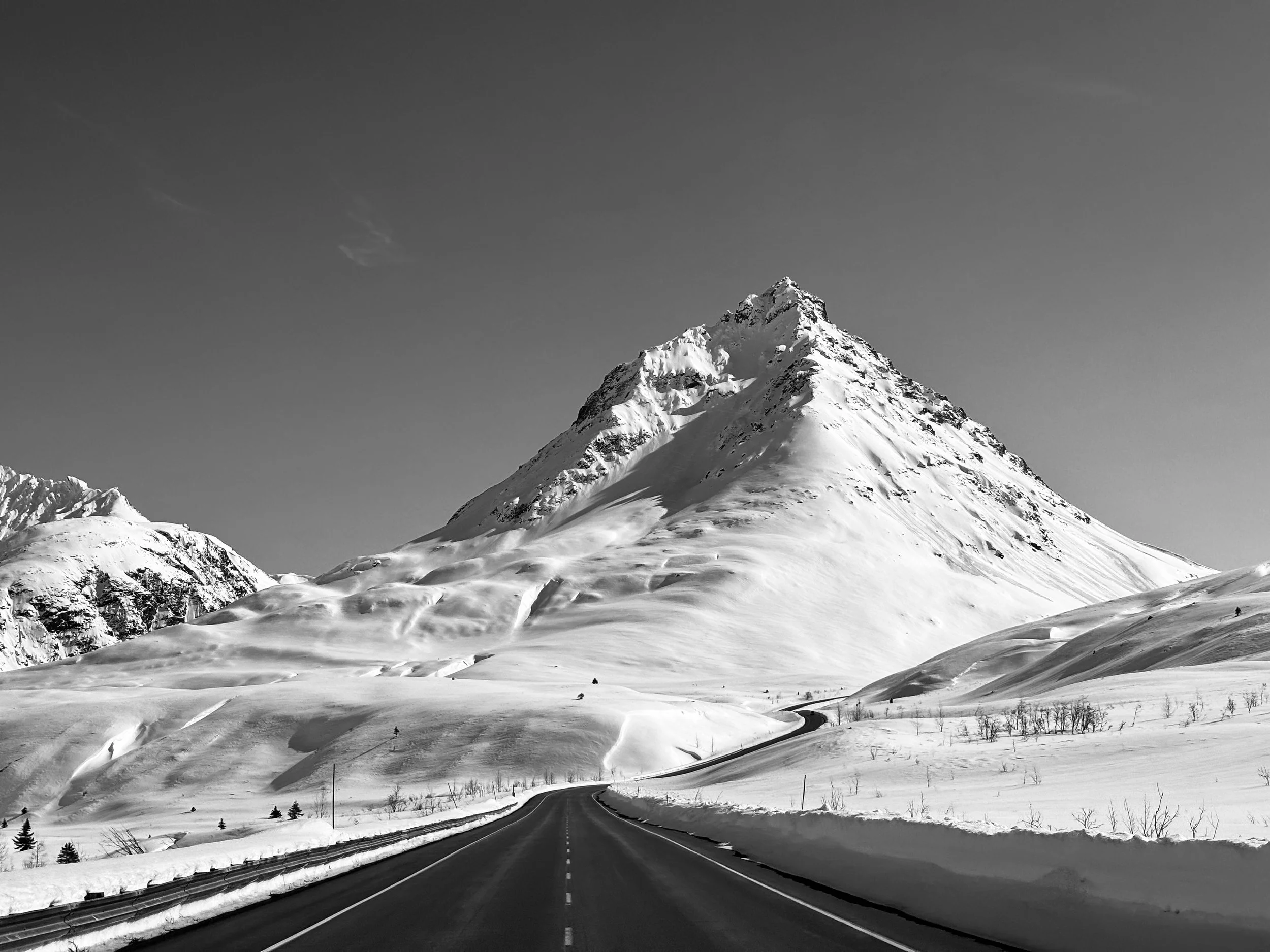
From Haines Junction we turn onto the Haines Highway, a road driven like a wedge through white into blue.
Mountains cup the truck—
small toy beneath avalanche,
held in icy palms.
At Chilkat Pass, men sit in camping chairs beside their grandsons while fathers launch snowmobiles directly into the slide paths. Black labs roam loose across the parking lot, greeting Sasha with the casual confidence of locals: Where are you from?
Then comes the descent into treeline. The U.S. border crossing. The ICE agent waves us through with barely a glance. Suddenly the speed limits are in miles again instead of kilometers. The pavement roughens. Potholes bloom in the road. Public trash cans disappear. Signs begin appearing for the eagle preserve and rafting companies.
Whales somewhere offshore.
Juneau ferry docks at dusk.
Totem greets us: Haines.
44h 41m (2,635 mi) via Alaska Hwy—Part 1, USA
Travel sketches from a long drive north.
―
The interstate goes—
America’s alphabet.
Speed limit: eighty.
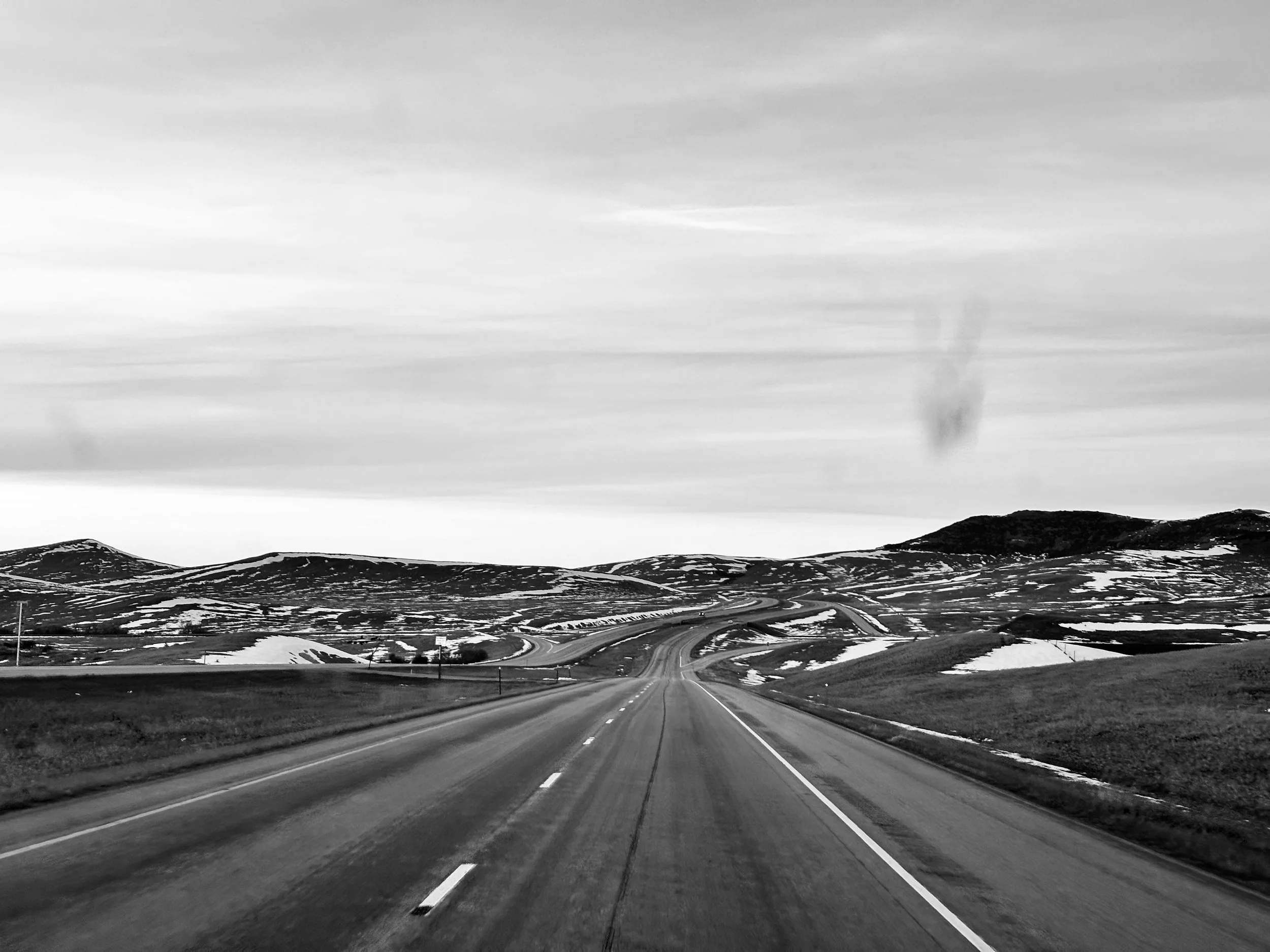
The farther we drive from Denver, the more the land opens. Southern Wyoming is so flat it seems to fold back on itself, like a section-sewn hardcover spread open on a table, flexing without breaking its spine. I-25 pursues broad pages of plateau, its gutters stitched with cattle gates and fence lines binding enormous ranches together like exposed thread.
Mile by mile, the truck keeps going, waiting for the story to write itself.
The Wolf flew in from New York to be my copilot on the long, lonely drive north to Alaska. Nearly seventy-eight now, he still wears his guide hat with a hawk feather tucked into the band and is remarkably spritely for someone who stepped off a dawn flight and straight into eight hours in the cab.
He rides shotgun peeling a clementine in one long spiral. Outside, the land opens wider and wider until it can hold almost anything. Memory rushes in to fill it. Herter’s catalogs. Roadside taxidermy. The old American West still flickering at the edges.
He was raised on its iconography in a way I never was. To him, the mesas and antelope are not symbols but returns to a place he’s never been. But his father came here in the 1950s, when the Wolf was a little boy, and shot an elk. He recalls:
Elk head on stone wall—
we bragged to the city kids
about the Wild West.
The wind wakes up and presses against the truck. I watch the fuel gauge sink as we climb hill after hill. It feels like Wyoming is trying to push us back toward Colorado.
Jackalopes linger
on the flat backs of mesas—
taunting the highway.
“They open the Strait, then close it. Open and closed,” the Wolf sighs after we top off at $4.39 a gallon. “They need to just make up their mind.”
There’s the book folding back on itself again.
The sunsets in Montana are so violently colorful they bruise the sky. Neon bands stack along the horizon like pancakes on a griddle. The truck follows the light slightly west, though for two days we have been driving almost exactly due north.
Northern light lengthens—
a compass pointing in twilight
up the latitudes.
The Wolf talks while I drive, though he still leans forward at every vibration in the truck. He thinks something is wrong with the new shocks and pulls up YouTube videos comparing suspension noises, holding the phone close to his face beneath the brim of his hat. I take his criticism personally, as if the truck were something I built myself.
In third grade we drew buffalo and talked about how magnificent it must have been to see them roaming the plains that had become our playgrounds.
Manifest Destiny—
taught like the dinosaur’s end:
violent, natural.
“The white men arrived in ignorance,” they told us, “like the meteor that killed the dinosaurs.”
“Huge and clumsy, yes, but ultimately a force of nature: inevitable, impersonal, beyond today’s judgement.”
Little Bighorn wind,
Custer dissolves into sage—
myths riot in dust.
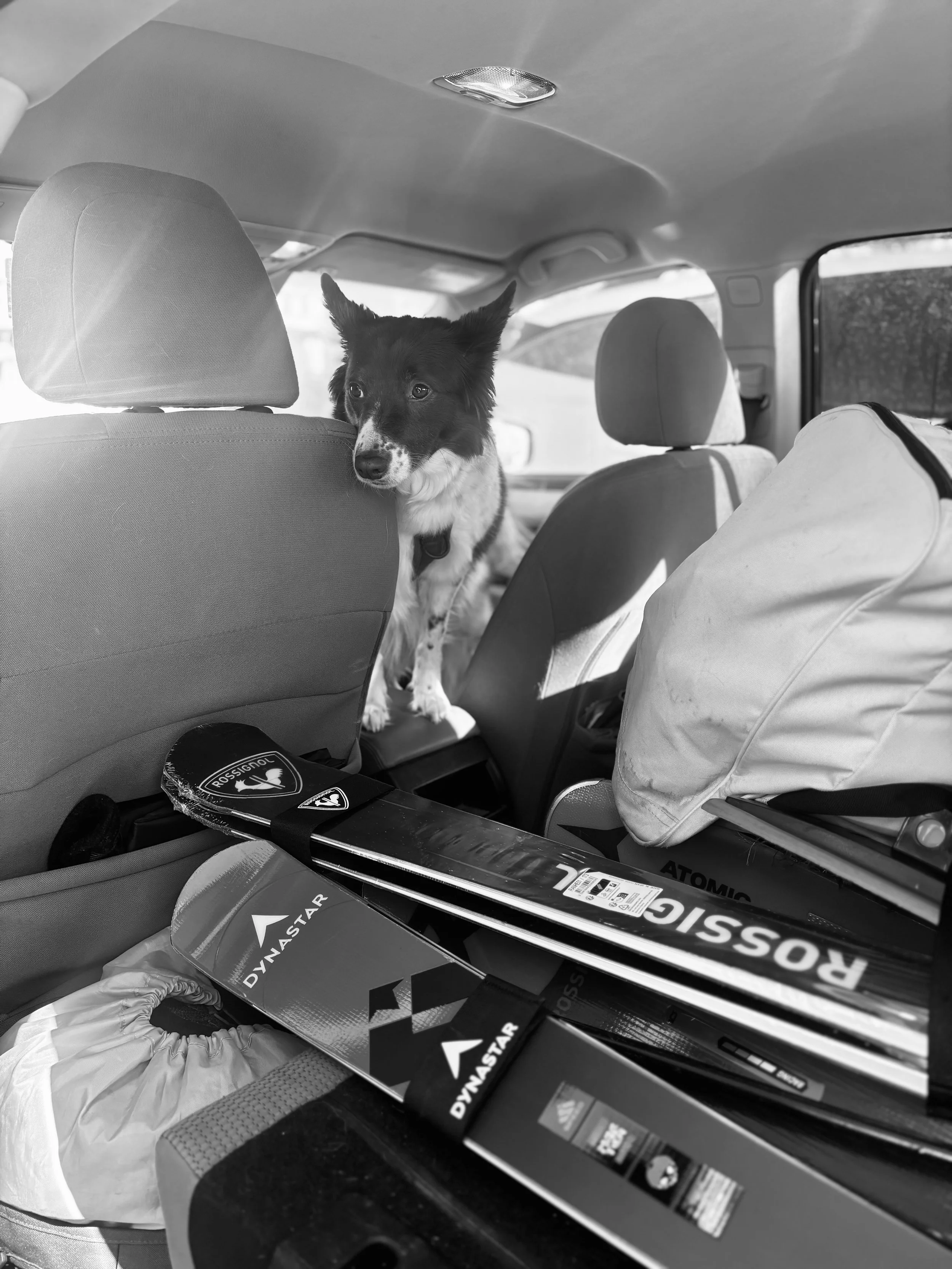
We pass a sign for Battle of the Little Bighorn, and the Wolf jolts upright, startling Sasha who’s claimed him as her cushion.
“Can we stop? I didn’t realize we’d pass this way...”
He feels about Old Westerns the way I feel about skiing in Banff. Along this endless route, we each have our private sites of pilgrimage.
It is off-season, midweek, after hours. Still, a field is a field, and many people died in this one. That makes it the kind of museum whose exhibits reveal themselves like a wound that never fully closes.
The park gates are shut, so we pull into the gravel lot of the Custer Battlefield Trading Post, where rows of white tipis rise beside the interstate. Across the road lies the battlefield itself: craggy bluffs and dissected uplands folding toward the Little Bighorn River. Here, in June 1876, Lakota, Northern Cheyenne, and Arapaho forces defeated the 7th Cavalry.
The story still hangs over the West like a billboard advertising unfinished history. One version survives in trading posts and roadside museums, in Marlboro ads and old books written in heroic tones: doomed cavalrymen making a noble last stand against impossible odds.
But the land remembers differently.
The battle was part of a larger war over expansion, broken treaties, and the seizure of Indigenous land. What became mythologized as “Custer’s Last Stand” was also a decisive Indigenous victory against an advancing empire.
We climb from the truck and wander the closed property. Behind the gift shop, beside racks of toy tomahawks and Custer keychains, sits a mound of buffalo skulls whitening in the sun, their hollow triangles echoing the tipis nearby. Sasha sniffs at the pile of bones and reaches for a horn with her teeth. I pull her away.
The last light clings to the ridge while headlights drift along the interstate below like ghosts moving through the basin. As in places like Gettysburg, after the battles come the highways: shipping lanes, frontage roads, housing developments. The traditional American habit of building forward over the dead.
In the morning, we push on from Billings. This last stretch of America is a land of long trains sliding beneath denim skies.
Road without ending—
belief flattens into miles
beneath prairie sky.
White crosses sprout beside the highway like weeds. The Wolf has figured out how to get Starlink running on his laptop. The bones of the Battle of the Little Bighorn are behind us now, and he seems satisfied he has seen all the Montana he needs to see.
But there are older graves here.
Last year, a rancher near Hell Creek uncovered what may prove to be the largest Tyrannosaurus rex ever found, its teeth nearly fifteen inches long. Leviathans layered beneath leviathans. Cavalry beneath interstate. Dinosaur beneath cavalry. The land keeps burying and revealing itself in turns.
Tyrants under ranch—
Each age leaves its skeleton
inside the next one.
The farther we get from cities, the better the baked goods become.
Boarded-up towns with Main Streets wide enough for wagons reveal local bakeries like pearls tucked inside rough shells. Cinnamon rolls beneath flickering neon. Out here, sweetness survives where almost nothing else does.
Long skirts, lemon steam.
Better than downtown cafés
beside diesel pumps.
We continue north toward the Sweetgrass Port of Entry, where Interstate 15 becomes Alberta Highway 4. The truck rolls forward in silence. We pass the Duty Free shop—with its decent liquor prices and fluctuating hours—without stopping. For now, we have had enough of American history.
28 hr (1,874 mi) via I-80 W
Poems composed on the drive from New York to Colorado.
―
Poems composed on the drive from New York to Colorado:
Ohio
Ski bro at the pump—
Jersey plates, puffy jacket,
knowing nod ensues.
Presidential
Birthplace of Lincoln—
green signs lecture as we drive.
Birthplace of Reagan.
Work Zones
Chevrons flash orange.
Arteries of asphalt squeeze;
neon hazards glow.
Iowa
Turbines rake grey sky.
Billboards preach roadside gospel—
America shrugs.
Accident
Semi on its side,
tipped like a child’s toy truck—
steel guts glint in sun.
Ovid, CO
Metamorphosis:
state lines shift, the earth stays flat—
Nebraska, but not.
The Whites
Poems written in a New Hampshire diner.
―
1.
North Conway woods—
sideways November light slips
between bare branches.
2.
Fall loosens its grip,
or maybe I’m the one who
cannot hold it still.
3.
The old man’s stone face
gave way to weather and time—
souvenirs remain.
4.
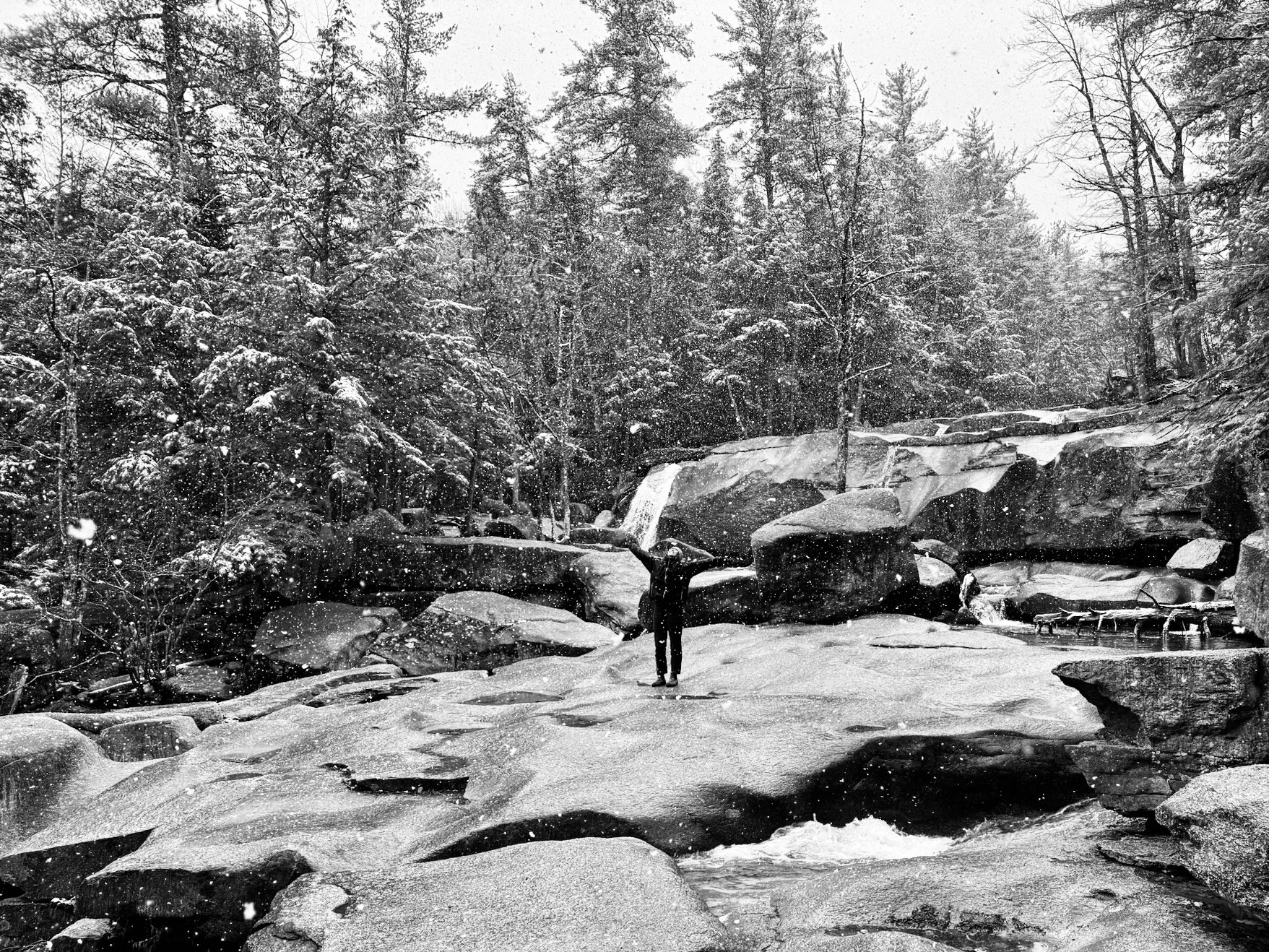
First snow on the Kanc—
the White Mountains disappear
to become themselves
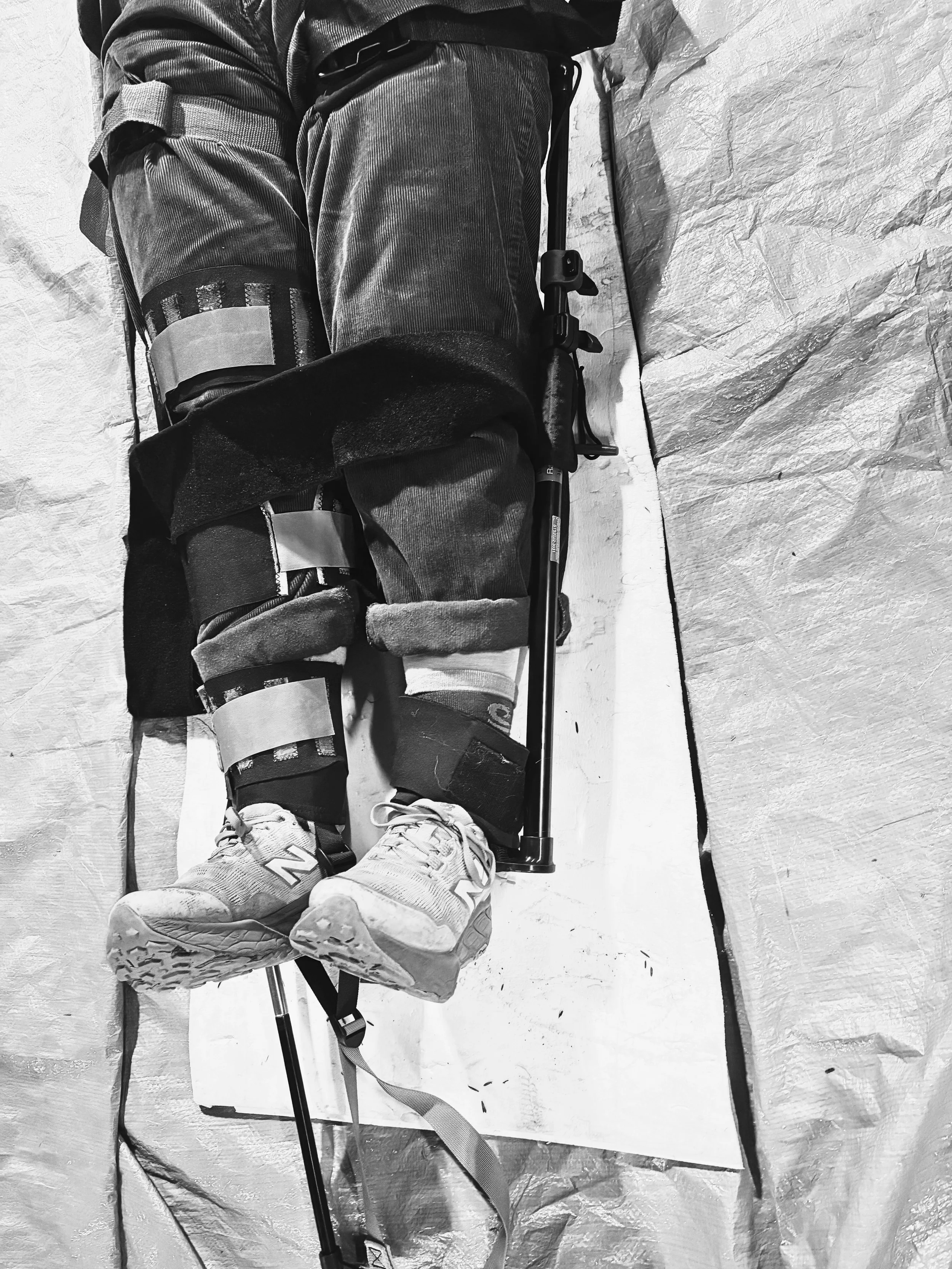
MOI
“CPR does not work in the woods.”
―
My knees chilled from kneeling in wet November leaves. Someone was playing an unconscious victim with unnerving conviction, half buried in duff. I palpated her limbs the way you check a jacket pocket you’re almost certain you haven’t lost your keys in—half hopeful, half afraid of what you’ll find.
“Just remember,” our instructor called out, hands tucked into his vest pockets, tone dry as tinder, “CPR doesn’t work in the woods. Hurry up and figure out what’s wrong with your patient.”
He wandered over to inspect my technique, which at that moment consisted mostly of wrestling my patient onto a sleeping pad and rooting, somewhat desperately, for a carotid pulse.
“Don’t reach over your patient like that,” he said. “Take the pulse on your side. Otherwise you’ll strangle her.”
Killing my first patient felt like a reasonable beginning to Wilderness First Responder—known, with varying degrees of affection, as “Woofer.”
For ten days, our group of twenty-one strangers revived plastic infants with stiff limbs, treated imaginary drunk campers, and staged the mass-casualty aftermath of a downed gondola in the pines of New Hampshire. Mornings meant rolling out of bunk beds, submitting gratefully to Nancy’s enormous breakfasts—Nancy being the campus cook and, by consensus, the only person keeping the entire operation emotionally solvent—and marching into the cold for scenarios. We memorized the necessary acronyms: AVPU, ABCs, SOAP. But the one that rooted itself most insistently—lodged, really, the way an impaled branch might—was MOI.
Mechanism of injury.
The origin story of pain.
The plot twist that gets you here, cosplaying catastrophe in the woods.
Outdoor professions attract a familiar cohort: the recent graduate not quite ready for a desk, and the retiree who spent twenty years at one and finally suffered the sort of existential rupture that results in a backpack purchase. Because of finances, there is very little in the middle. The twenty-two-year-olds are perfectly content to live under tarps in a state of communal, provisional bliss. The retirees, meanwhile, can afford to resurrect the happiest memories of their youth with the zeal of someone performing chest compressions on nostalgia. The metronome remains the same, but the song used to keep rhythm has shifted—from the Bee Gees to Chappell Roan—leaving those of us with aging but still functional knees and long Zillow wishlists in a kind of generational no-man’s-land.
Around me sat human clippings from a vintage REI catalog: rookie ski patrollers; a seventy-year-old scientist who surveyed remote Alaska; a retired teacher moonlighting with search-and-rescue; a twenty-something backcountry ski guide; a young “brown bear” guide fresh off his summer in the Kenai Peninsula; an eighteen-year-old New Yorker whose motives remained inscrutable; a nature therapist in her sixties. Only two people were in my age bracket. We spotted one another immediately, exchanging the quiet recognition of travelers who’ve missed the last ferry and now occupy the same dimly lit dock.
23 YOF.
70 YOM.
40 YOF.
Even stripped to the barest patient identifiers, we were an earnest, slightly improbable cast—twenty-one strangers who had, in various ways, accepted that the wilderness is where one eventually meets the hard limits of the human body.
“What’s our favorite word?” the instructor asked one morning, tapping the smart board with a digital pen that seemed to please him disproportionately.
“Continuum!” the class replied, as though it were a moral directive.
And in a way, it was. Everything, we learned, exists on a continuum: shock, infection, heat injury, hypothermia, traumatic brain injury—which the instructor colorfully described as “the brain trying to leave the skull through the big hole.” Careers, relationships, and taxes share the same sliding-scale inevitability. Talking nicely and sugar water, we were assured, help with most things.
“At the end of the day,” our instructor announced, “we’re all fucking hummingbirds.”
By then we had practiced impalements, strokes, heart attacks, broken ribs, tourniquets, and death notifications. We stabbed training EpiPens into our thighs and splinted one another’s intact bones with sticks and sleeping pads. Underneath the theatrics pulsed a quieter question: Will I ever need this? And: Will that ever be me?
Last year, it was. I had been a real patient. There is no moulage for c-word things. Nothing in the textbook—despite its generous enthusiasm for diagrams—prepares you for the way a medical event can rearrange your sense of chronology. My MOI was internal, discreet, the sort of plot point you can’t point to on a map.
Pema Chödrön writes that “nothing ever goes away until it has taught us what we need to know.” If that isn’t a continuum, I don’t know what is.
By week’s end, EMT Sensei—his own MOI wrapped neatly in a knee brace—led us to a ridge where five classmates and two mannequins lay strewn in dramatic disarray, moulaged with almost theatrical verve. Moving toward emergency always feels like approaching a mirror: the mountains we climb, the waters we cross, the people we love; the moments when things go wrong and you kneel beside a body, hoping your hands remember their choreography.
“So, what did we learn this week?” he asked on the final day.
“CPR doesn’t work in the woods!” we shouted.
But the unspoken second half had become obvious: But that doesn’t mean we don’t try.
I tucked my badge away and climbed back into the Subaru, pointing myself west. At my cushy resort mountain, is ski patrol. Helicopters on call. An army of elite orthopedic surgeons.
But first responder training isn’t about conquering chaos or even saving lives; it’s about cultivating a kind of interior ballast. The ability to arrive—at accidents, at relationships, at your own life—with a little more steadiness than the day before. To assess scene safety first, then decide whether you have a duty to act. And if you don’t, whether you will act anyway. It’s about widening, however minimally, the fragile circle in which you may be able to make something a little better. Including, it turns out, the slow, awkward business of getting older—especially when you find yourself wedged between the sendy, twenty-year-old hopefuls and the sixty-something wilderness sages. It is, like everything else, a continuum.
In the end, MOI feels less like a mechanism of injury than a mechanism of insight: why we are drawn to these places, why we return, why some of us build our odd little lives at the edge of weather and chance.
And why, in a hexagonal building in New Hampshire, twenty-one strangers worked so intently—earnestly, imperfectly—to learn the simplest and hardest thing: how to keep one another alive.
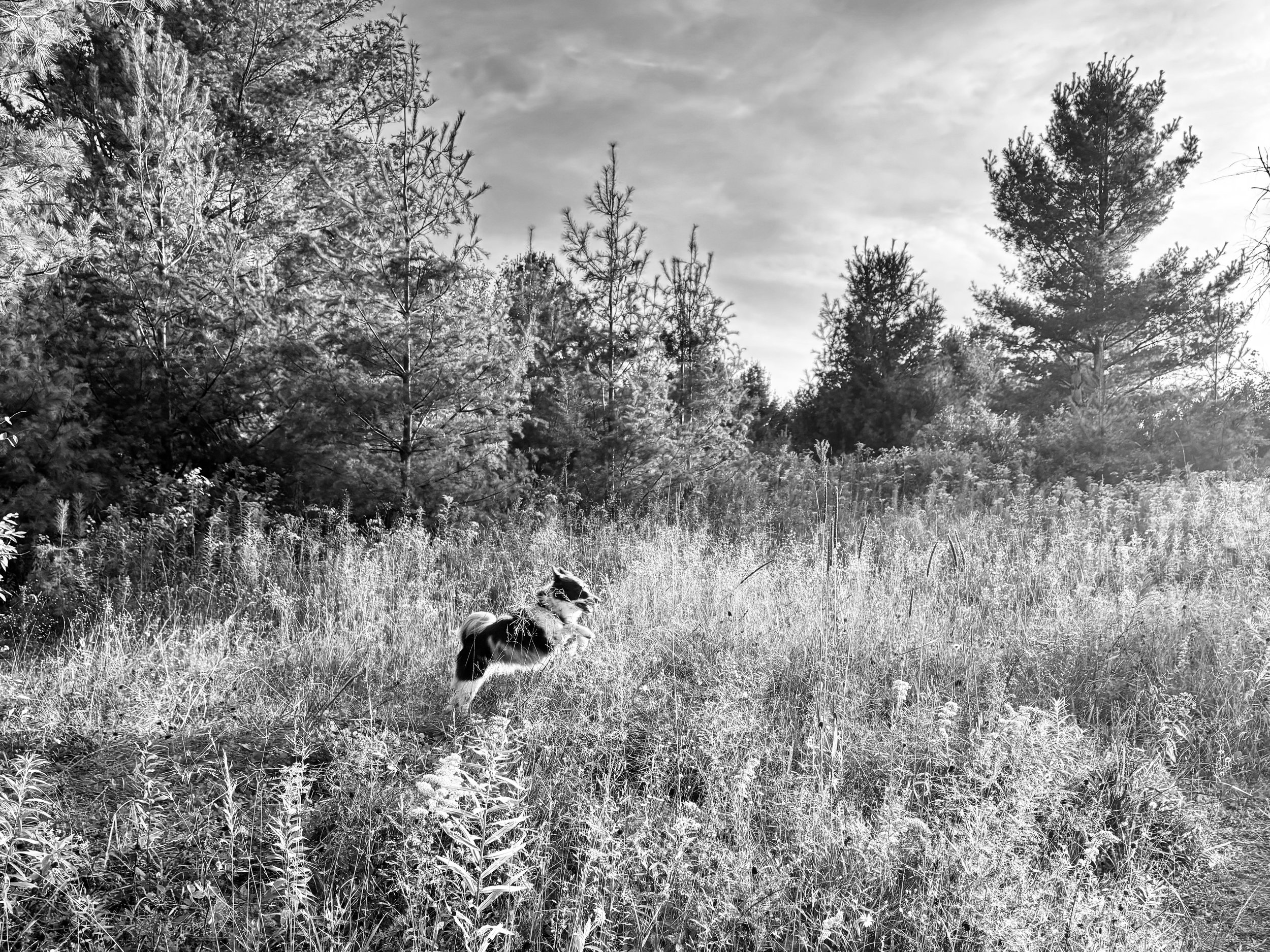
Used To Be August
Waiting for the seasons to change.
―
After the first frost:
Hoar
Yard sighs, mother-gray;
brittle blades wake silver-spined—
the forest shudders.
Mr. B. B. Says
“Used to be August,”
he sighs of October rime—
“frost’s gone by lunch now.”
Layers
Fog, river’s cashmere;
Hudson layers for the cold—
winter waves hello.
Dry Suit Season
Neoprene to wool—
paddle will soon be ski pole;
make sure zippers close.
Denning
Bears nose through the duff;
out back, a tarp snaps in wind—
snow hums in the pines.
On HABs
The Hudson falls ill.
―
The Wolf’s had a birthday since I last saw him at the Seattle airport fussing over his boarding pass, not quite thawed from our Inside Passage trip. Seventy-seven Augusts and counting, he now boasts a gold hoop in his left ear and a turkey feather tucked in his hatband. “Talismans,” he calls ‘em, to sanctify his new status as a sea kayak guide.
We met unloading boats at Kingston Point, and have paddled together ever since. From Rhode Island to Alaska, the Wolf’s hand-of-godded and towed me out of trouble more times than I care to admit.
This summer, while I’ve been away in Maine, he’s been leading trips Bannerman Castle, the eccentric ruin on Pollepel Island. I sign up to see him in action my first weekend back. The wolf wades into the shallows and shoves the Pungos off the beach. Their sturdy, almond-shaped hulls rock in the barge wake as Maine’s erratic lobstermen and postcard beaches give way to New York’s working waterway.
Here, city etiquette seeps upstream—sidewalk habits translate to current and channel. Boats of all sizes and kinds dodge, shift, merge. The tour crowd changes, too—New Yorkers, kin to New Englanders, but tempered: grittier, somehow sleeker. A Women’s History professor from Albany tells me why she drove her family three hours downriver to kayak today: “History,” she says. “What else?”
We cross on slackening flood and scramble over the rocky landing, slick with periphyton. The Hudson doesn’t swing ten feet like Maine waters, but its three-foot tide still breathes diurnally through this ancient fjorded valley.
A volunteer guide in a BANNERMAN’S CASTLE shirt with a Long Island lilt greets us at the island and gathers us by Mrs. Bannerman’s pie garden. The Wolf hangs back, chewing the inside of his cheek. He stands by and listens with the seasoned stoicism of one who’s spent the whole summer silently judging another guide’s schpeal. He knows her script by heart.
“He was the country’s original arms dealer,” the Wolf whispers to me. “Ran the biggest military surplus operation that became the Army Navy Surplus Store. This place is an adult game of hide-and-seek.”
After the Spanish–American War, Bannerman bought 90% of the US military’s unused weapons, uniforms, and black powder—so much that Brooklyn officials blanched at the thought of his munitions next door to the naval yard. The baron desired storage and spectacle, so he doodled himself a castle—part Scottish baronial, part billboard—its crenellations spelling BANNERMAN’S ISLAND ARSENAL for every passing steamboat to read. Poured quick and cheap, the concrete fairy-tale went up quick. For a time, it advertised a fast-tracked empire.
Then came the classic Gilded Age plotline: the warehouse exploded in 1920, Bannerman followed soon after, and the slow unspooling began. In 1969, fire set the period at the end of the sentence. What’s left is a buttressed rib cage open to weather, a shell that now stages local theater and a ruin Metro-North commuters know by heart—a concrete pastiche of The Great Gatsby’s closing line: “So we beat on, boats against the current, borne back ceaselessly into the past.”
Neon dots of algae whorl off my paddle like confetti. They are HABs—harmful algal blooms. A spotted lanternfly touches down on my hat —cryptic gray forewings, sudden aposematic red beneath.
“Kill it,” the Wolf says, soft but absolute. “Slowly, if you can, to send a message to the others. They’re very invasive.”
HABs on the Hudson.
The worst outbreak of blooms in 40 years inscribe the present tense in a scientist’s lexicon. Cyanobacteria and other phytoplankton—neither fish nor tree—are photosynthesizers catalogued by color and clade: green, red, brown; diatoms, dinoflagellates, blue-greens. In balance, they underwrite primary productivity, turning light into living carbon. But increase nutrient loading—sewage, lawn runoff, manure; warm the water; slow the flushing—and eutrophication takes hold. Pigments slick the surface like spilled paint.
Some blooms merely shade; some produce toxins. All are a message in dissolved oxygen and turbidity: choke the light, starve the gills, tilt the river toward hypoxia. Longer heat stretches stratification; drought reduces turnover; nutrients light the fuse.
Contamination isn’t dramatic. It’s steady—like sedimentation, a floodplain filling grain by grain. To get rid of the HABs, as the Columbia Riverkeeper says, the task is none other than tackling climate change itself.
While small efforts from individuals can always help, like picking up pet waste, the true remedy is for it all just to stop. Then wait for as long as it takes for the water to clean itself. But once the bloom is here, there’s little that can be done. Don’t swim in the waters, keep the dog away, and, in time, maybe it’ll dissipate.
“For time is the essential ingredient,” writes Rachel Carson in Silent Spring; “but in the modern world there is no time.”
The day after the paddle, the Hudson Valley Garlic Festival sprawls in a field to the west of Saugerties.
The mosaic of garlic hats, witches, vampires, and soil-rich hands throngs in the late September heat. “Eighty degrees,” sighs a vendor, wiping sweat from her brow with her forearm.
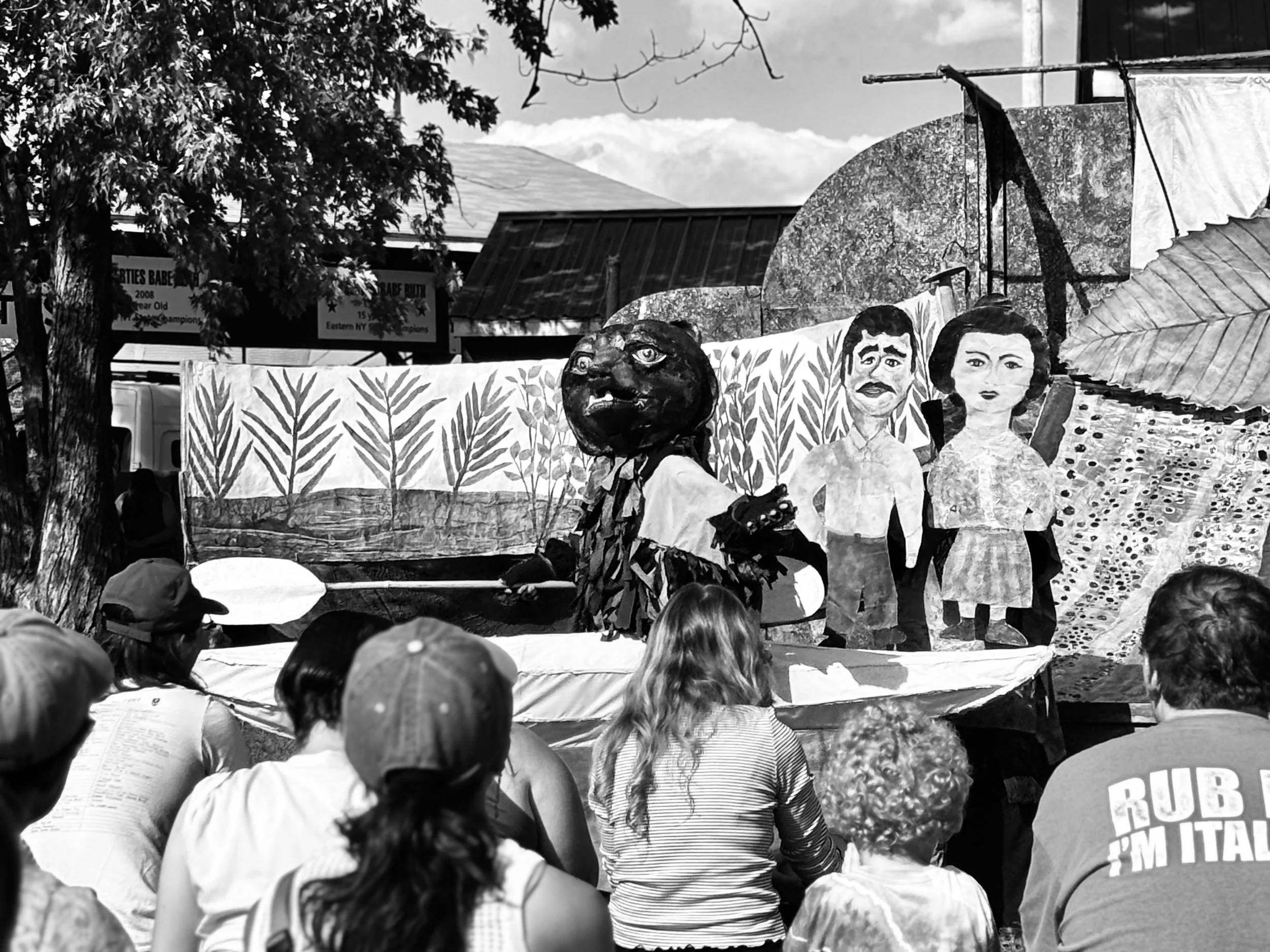
In the hay-bale commons, the Arm-of-the-Sea Theater unfurls a puppet river in cerulean silks and sings a song about photosynthesis to a chorus of equally delighted adults and kids. The troupe’s mission—“handmade theater as an antidote to ubiquitous electronic media and consumer culture”—ripples through the crowd as boos meet the colonial realtor and cheers rise for hemlock, oak, and pine.
Some of us are locals; some are not. Everyone is listening. For the finale, a black bear waddles onstage with a kayak cinched around his belly, paddle in paw. He dips the blades into imagined current, singing of environmental resilience to papier-mâché trout and city transplants alike.
Tucked in the generous allium bounty of small farms, the play reminds me that this place where I’ve made my home holds more than ruin and warning.
Sea kayak guides lead people into many waters. In Maine, we sell clarity—porpoises and ledge ecology, tidal respiration you can feel in your bones. We point to eiders surfing swell, pull out lobster gauges, and say, look how well the world keeps working.
It’s easy to forget that Rachel Carson spent her summers on Southport Island, just across the bridge from Boothbay Harbor where I lived this summer—and that her time there shaped the work that helped end DDT’s reign. Without her, the islands where I taught kids to Leave No Trace and delight in shorebird abundance might have read differently.
The Wolf threads us through the arteries of an overbuilt New York watershed to a Gilded-Age folly between interstate bridges. The Hudson’s riparian speaks in closures and neon veils, but also in the older key of resilience and succession: flood-pulse, leaf-drop, Forever Wild. On the banks, a countercurrent slowly gathers—garlic-festival crowds, hay-bale audiences, a bear in a cardboard kayak. Creativity is the Hudson Valley’s unique civic hydrology: it braids strangers, slows the current of despair, and makes room for oxygen.
The river remembers how to heal. We must remember how to belong.
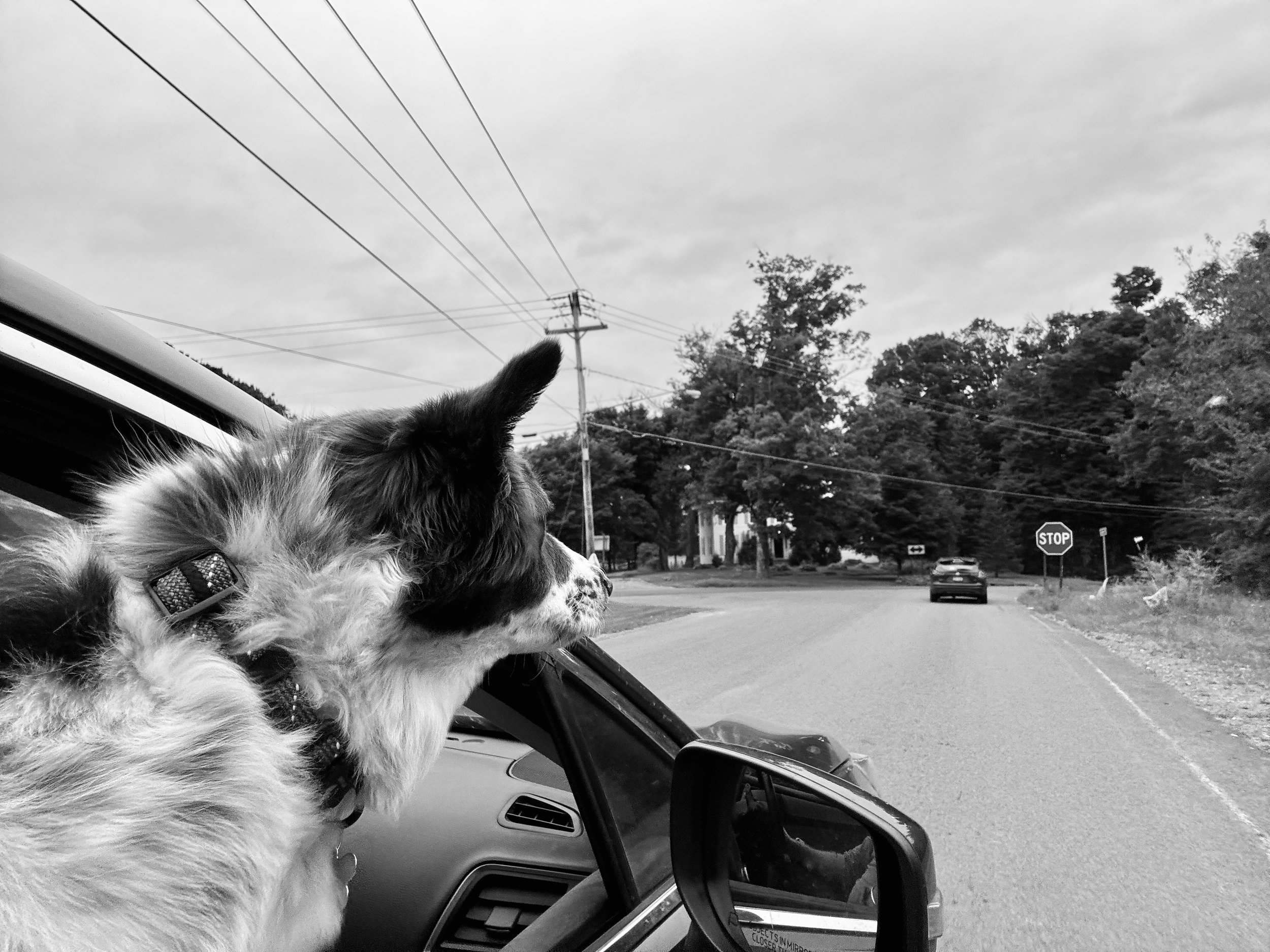
28 hr (1,873.3 mi) via I-80 E
Poems composed on the drive from Colorado to New York.
―
Poems composed on the drive from Colorado to New York:
Mile 1
My life in a box
at seventy miles an hour—
winter home recedes.
Mile 74
Road signs like old friends,
markers of seasonal life—
one journey, two homes.
Mile 562
Flatness, everywhere.
Time itself has leveled out—
must be Nebraska.
Mile 1487
Another podcast.
“Ohio,” GPS laughs—
nine hours to go.
Mile 1776
Road steams with insects;
even headlights feel soggy—
“welcome back, East Coast.”
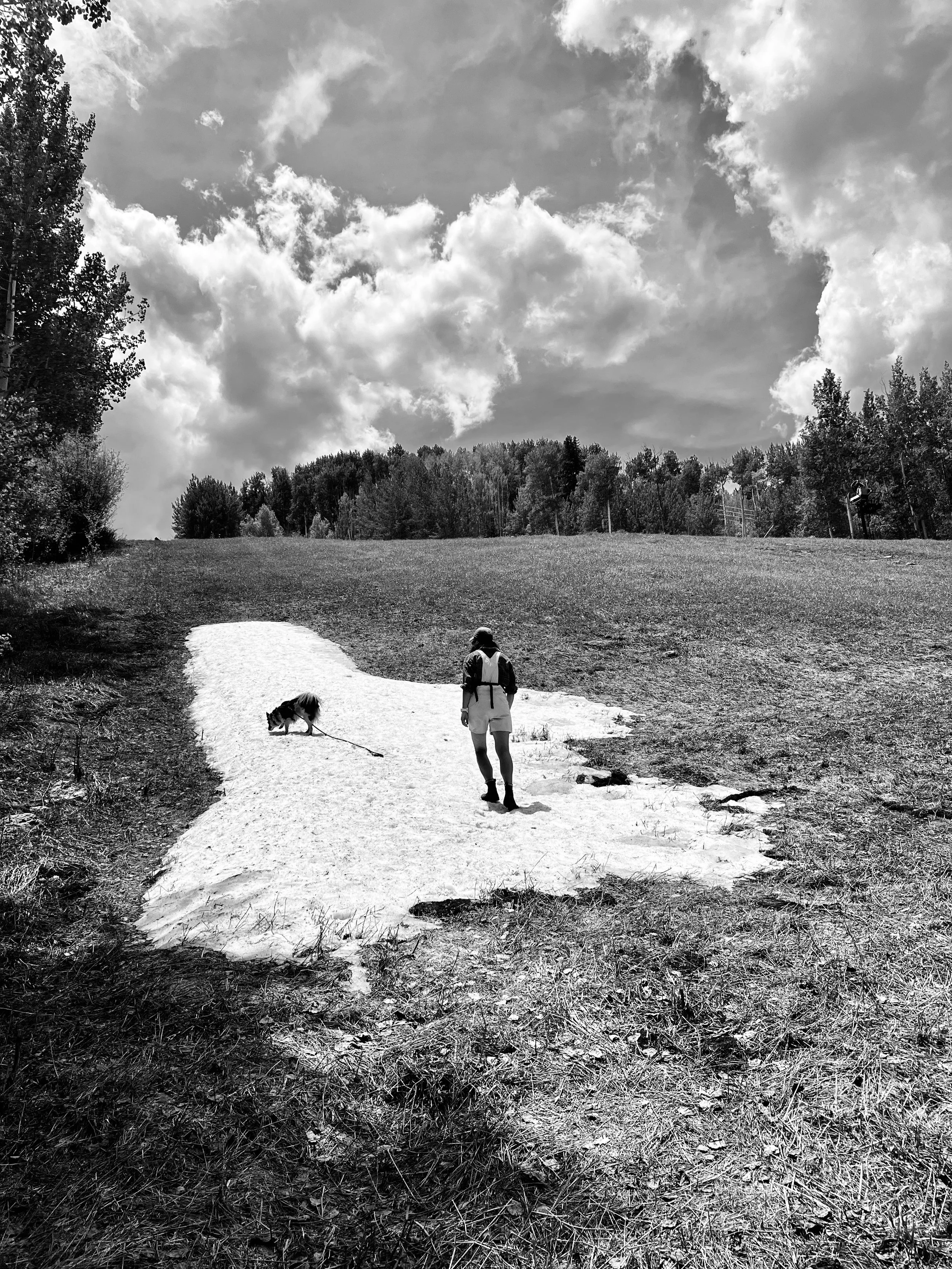
Mud Season
Ski school is closed.
―
Ski school is closed.
Closing Day
Tourists clear out fast.
Now the mountains hum with mud—
just the way we like.
Cheap Dinner
Snow tires still on.
Main Street maître d calls out:
“Half off for locals!”
Scene Change
Rivers rise and run—
an idea caught in between.
The thaw rushes on.
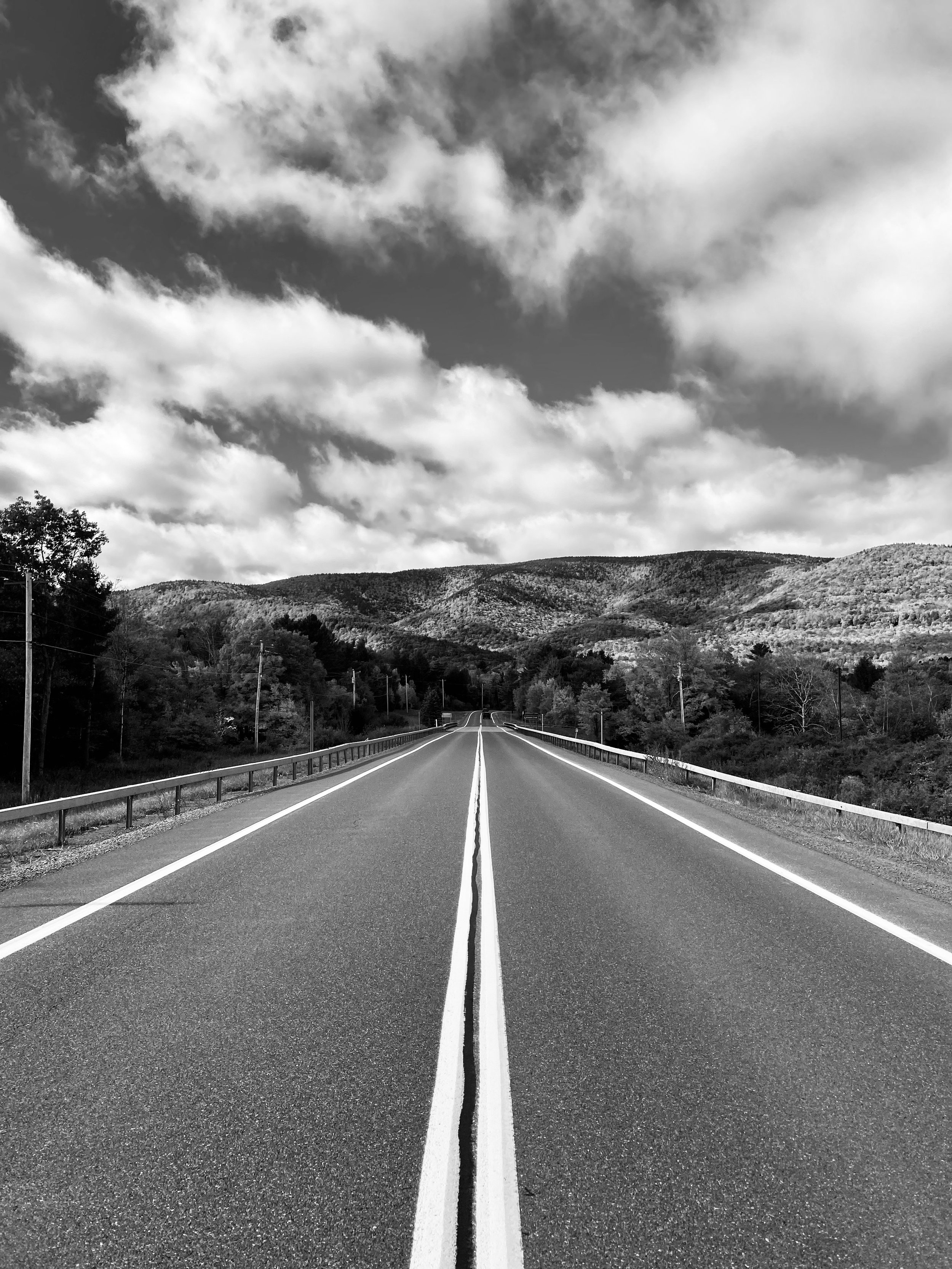
29 hr (1,957 miles)via I-76 W and I-70 W
Poems composed on the drive from New York to Colorado.
―
Poems composed on the drive from New York to Colorado:
Orders
“Stand up every hour,”
the oncologist instructed.
Long way home ahead.
Borders
State line, then next one—
recovery marked in miles,
not medical charts.
Indie
Exit Indiana—
His mom’s thumbprints cooling slow;
we stay one hour.
Night Roads
We go half-asleep—
mercury lights, semi trucks,
lanes of passing ghosts.
Southern Route
Morning in Kansas;
no ruby slippers this time—
tap heels, keep driving.
Love’s
Love’s gas stations boast
small dog parks behind the pumps.
We stop at them all.