Haiku, Catskills Kristin Knox Haiku, Catskills Kristin Knox

Daylight Savings

Poems composed during a brief visit to my farmhouse.


Poems composed during a brief visit to my farmhouse:


March 3

Late winter loosens
Snow softens in shaded woods
Watershed waiting.

Route 214

Sleet on the Clove road
Barred owls calling through twilight
Snowdrifts reach for stars.

Sixty-Five

Suddenly it’s March—
Grilled cheese with Mr. B. B.
We eat in the sun.

Spring Entering My House

Warm windowsills teem
Ladybugs wake in the walls
Spring finding the cracks.

Thaw

Ice slackens its hold
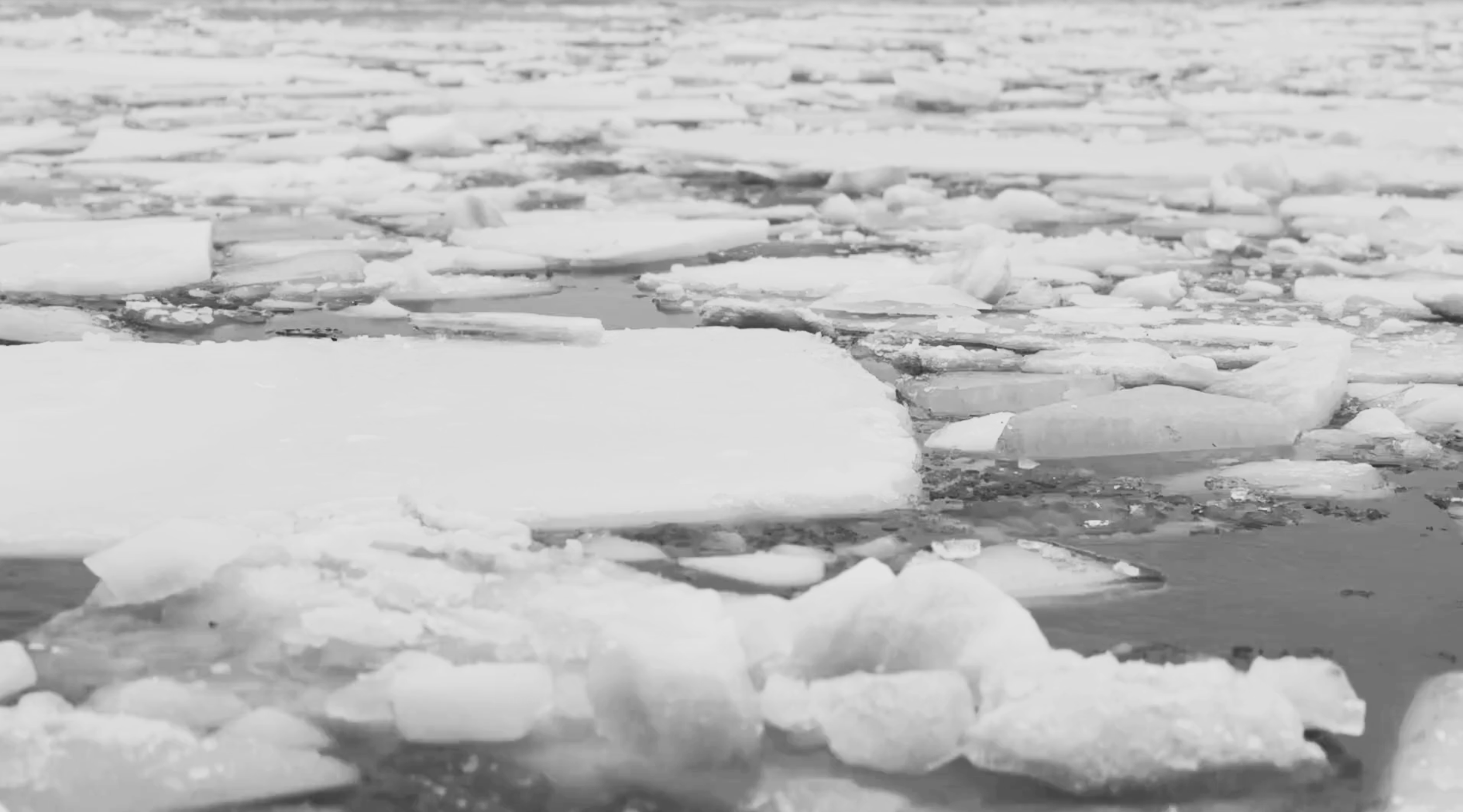
Floes drift with the Hudson tide
Sea moving northward.

Runoff

Stony Clove wakes up
Esopus and Hudson rise
Water, everywhere.

Daylight Savings

Light staying longer
Rivers loud in ruddy beds
Scent of rain returns.
Read More

Used To Be August

After the first frost.


After the first frost:

Hoar

Yard sighs, mother-gray;
brittle blades wake silver-spined—
the forest shudders.

Mr. B. B. Says

“Used to be August,”
he sighs of October rime—
“frost’s gone by lunch now.”

Layers

Fog, river’s cashmere;
Hudson layers for the cold—
winter waves hello.

Dry Suit Season

Neoprene to wool—
paddle will soon be ski pole;
make sure zippers close.

Denning

Bears nose through the duff;
out back, a tarp snaps in wind—
snow hums in the pines.
Read More

On HABs

The Hudson falls ill.


Spring and fall bookmark brief moments of homecoming. My little farmhouse sits tucked in between the toes of New York’s storied hills. Liberated from AirBnb guests, it waits for my return. More base than home at this point, the sturdy structure built by the hands of neighbors who still dwell on either side of me, up and down the valley, serves for much of the year as gear storage, waypoint, repository of pasts and perhaps-future lives. But in May, a little of June, some of September into November, once again, it’s home.

The whole way down I-95 from Maine, my salt-streaked Delphin snake-strapped to the Subaru’s roof, I’m eager for it. Not just the house with its king size bed with a deliciously firm mattress, but also my so-called homewaters. The Hudson riparian zone flows the warm, familiar brackish where I first slalomed bow-draws through waterlilies that raft in the back-eddies. But before I can even unload the car, a warning from local paddlers lands in my inbox: HABs—harmful algal blooms—on the Hudson.

Kingston Point Beach, my closest and most familiar little launch, is closed.


If the decades of my life are book chapters bound by a crooked a spine, it is the Hudson. Before I was a paddler, the river bookmarked a layer I barely even perceived—an urban wind tunnel in winter, a summer fringe to the High Line, a moat separating “the center of the world” from its antithesis, New Jersey. Then Covid redrew the isobars of my life. I crossed the GW Bridge, followed the estuarine gradient upstream, and settled in the headwater hills the river once carved with ice.

Then, three summers ago, the Hudson became my kayak nursery and classroom: first strokes and wet exits, rescues practiced in green-brown chop, the path that led to my instructor cert with Hudson River Expeditions. My first overnight as a sea kayaker—a seventy-mile, four-day descent from Poughkeepsie to New York—felt like traveling a trophic and cultural cline, the ebb pulling us beneath iconic bridges like beads: Mid-Hudson, Newburgh-Beacon, Bear Mountain, the re-christened Mario Cuomo, and at last the little red lighthouse tucked under the GW. To paddle my way back into midtown was to tie off a transition between life eras with a tidy bowline: from city-bound writer to outdoor professional, strung along a single body of water.


“The Hudson was once a cesspool of filth,” the history-buff kayakers love to remind you. “For centuries, people dumped all kinds of crap here—dioxins, pesticides, raw sewage. Indian Point left its mark, and GE, worst of all, poisoned whole reaches with PCBs. The cleanup only began in the 1970s. Amazing we can even paddle here now.”

The worst outbreak of blooms in 40 years inscribe the present tense in a scientist’s lexicon. Cyanobacteria and other phytoplankton—neither fish nor tree—are photosynthesizers catalogued by color and clade: green, red, brown; diatoms, dinoflagellates, blue-greens. In balance, they underwrite primary productivity, turning light into living carbon. But increase nutrient loading—sewage, lawn runoff, manure; warm the water; slow the flushing—and eutrophication takes hold. Pigments slick the surface like spilled paint. Some blooms merely shade; some produce toxins. All are a message in dissolved oxygen and turbidity: choke the light, starve the gills, tilt the river toward hypoxia. Longer heat stretches stratification; drought reduces turnover; nutrients light the fuse.

It’s not just the Hudson, either. In Maine, they warn of “red tide.” After heavy rainfall, shellfish become suspect. While clams and mussels can purge in days or weeks, oysters bioaccumulate and hold toxins like childhood memories.


Our first weekend back, we drive to Cornwall to meet my paddling buddy, the Wolf. He’s had a birthday since I last saw him at the Seattle airport sitting at a Chinese restaurant in the terminal not quite thawed from our expedition. Seventy-seven Augusts and counting, he now boasts a gold hoop in his left ear and a turkey feather tucked in his hatband. “Talismans,” he calls ‘em, to sanctify his new status as a kayak guide.

Before he ever got the gig, he guided me. We met unloading the same boat, Alchemy Daggers, at Kingston Point, and have paddled together ever since. From Rhode Island to Alaska, the Wolf’s hand-of-godded and towed me out of trouble more times than I care to admit.

This summer, he’s been leading trips Bannerman Castle, the eccentric ruin on Pollepel Island. The HAB index down here isn’t high enough to cancel tours, so he launches our group in the shallows and waves us off the barge wake. Little green dots whirl off my paddle like confetti. A spotted lanternfly touches down on my hat brim—cryptic gray forewings, sudden aposematic red beneath.

“Kill it,” the Wolf says, soft but absolute. “Slowly, if you can, to send a message to the others. They’re very invasive.”

Maine’s erratic lobstermen and postcard beaches give way to New York’s working waterway. Here, paddlers thread wake, wind, and weekend barges. City etiquette seeps upstream—sidewalk habits translated to current and channel. The boats dodge, shift, merge. The tour crowd changes, too—New Yorkers, kin to New Englanders, but tempered: grittier, somehow sleeker. A Women’s History professor from Albany tells me why she drove her family three hours downriver to kayak today: “History,” she says. “What else?”

We cross on slackening flood and scramble over the rocky landing, slick with periphyton. The Hudson doesn’t swing ten feet like Maine waters, but its three-foot tide still breathes diurnally through this fjorded valley. A volunteer guide in a BANNERMAN’S CASTLE shirt with a Long Island lilt gathers us by Mrs. Bannerman’s pie garden. The Wolf hangs back, chewing the inside of his cheek. He knows the script; the island’s story is an American geomorphology of ambition and decay.

“In 1900,” the guide begins, “a Scottish immigrant named Francis Bannerman VI purchased this rock and began building what he called his Arsenal…”

“He was the country’s original arms dealer,” the Wolf whispers, jumping ahead of the official narrative. “Ran the biggest military surplus operation that became the Army Navy Surplus Store. This place is an adult game of hide-and-seek.”

The guide confirms the Wolf’s footnote: after the Spanish–American War, Bannerman bought 90% of the US military’s unused weapons, uniforms, and black powder—so much that Brooklyn officials blanched at the thought of his munitions next door to the naval yard. The baron desired storage and spectacle, so he doodled himself a castle—part Scottish baronial, part billboard—its crenellations spelling BANNERMAN’S ISLAND ARSENAL for every passing steamboat to read. Poured quick and cheap, the concrete fairy-tale went up quick. For a time, it advertised a fast-tracked empire.

Then came the classic Gilded Age parabola: the warehouse exploded in 1920, Bannerman followed soon after, and the slow unspooling began. In 1969, fire set the period at the end of the sentence. What’s left is a buttressed rib cage open to weather, a shell that now stages local theater and a ruin Metro-North commuters know by heart—a concrete pastiche of The Great Gatsby’s closing line: “So we beat on, boats against the current, borne back ceaselessly into the past.”

Last year, when my surgery kept us in the Catskills longer than planned, J. became one of those commuters. Three times a week he watched the ruin drift past his train window and wondered, What is that place? Now, circling the bones of its drawbridge by kayak, he carries the gleam of a boy in his first European dungeon. Pattern recognition fires.

“It’s like the AI bros of today,” he muses, and the history professor chuckles. “All in on a good idea, no training or foresight. Hoard the tech, ignore the regs that are coming, pretend obsolescence won’t arrive. I call it the ‘let’s-build-a-fort’ mentality. That’s what this Bannerman dude did—and look what happened.”

“Spot on,” she replies. “Everything that’s happening now is not unprecedented. Only question is: what’s your role in all this going to be?”

The Wolf’s role is clear.

“Four o’clock!” he cries. “Time to go!”

His bow edges out, turkey feather an exclamation point. The historian tracks his line across the channel toward the take-out, reading the microcurrents by the feather. Green freckles wink in our wakes. She flicks a lanternfly from her shoulder; it pinwheels on the miso-colored surface. J.’s comparison lingers. If Bannerman’s boom is a parable for our extractive cycles, the HABs are nature’s bots: cellular networks that, in low abundance, the system metabolizes—but with heat, stagnation, and feed, they scale into systemic risk. Lethal for pets and harmful to humans.


Contamination isn’t dramatic; it’s steady—like sedimentation, a floodplain filling grain by grain. To get rid of the HABs, as the Columbia Riverkeeper says, the task is none other than tackling climate change itself: “…we need to reduce nutrient inputs from industrial chemicals, fertilizers, manure, and human waste; increase water flow; address the temperature impacts of dams; and curb climate change.”

While small efforts from individuals can always help, like picking up pet waste, the true remedy is for it all just to stop. Then wait for as long as it takes for the water to clean itself. But once the bloom is here, there’s little that can be done. Don’t swim in the waters, keep the dog away, and, in time, maybe it’ll dissipate.

“For time is the essential ingredient,” writes Rachel Carson in Silent Spring; “but in the modern world there is no time.”


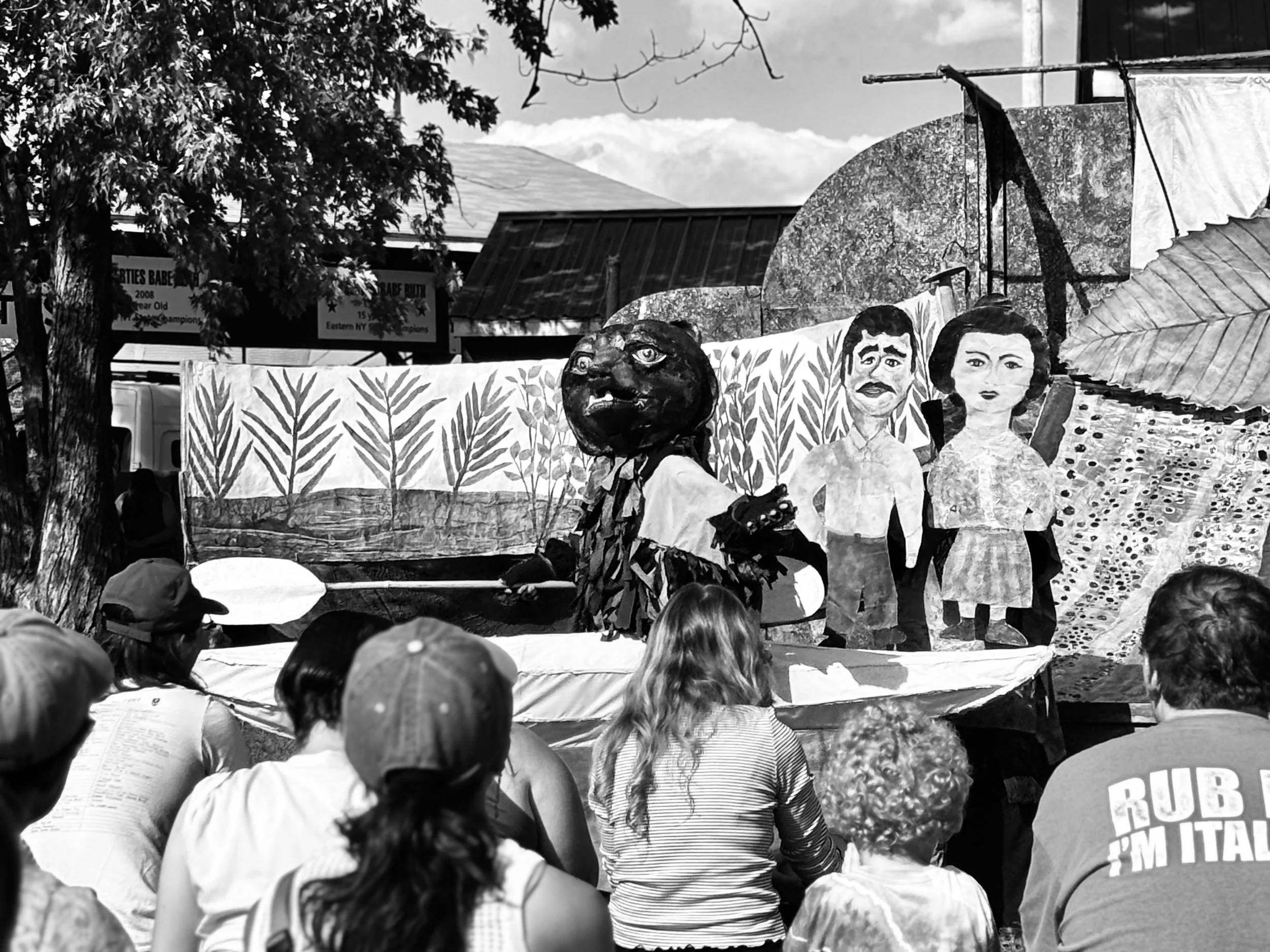
The next day, J. and I head to the Hudson Valley Garlic Festival. Eighty degrees in late September. Saugerties is a mosaic of garlic hats, witches, vampires, and soil-rich hands. In the hay-bale commons, the Arm-of-the-Sea Theater unfurls a puppet river in cerulean silks and sings a song about photosynthesis to a chorus of equally delighted adults and kids. The troupe’s mission—“handmade theater as an antidote to ubiquitous electronic media and consumer culture”—ripples through the crowd as boos meet the colonial realtor and cheers rise for hemlock, oak, and pine. Some of us are locals; some are not. Everyone is listening. For the finale, the bear waddles onstage with a kayak cinched around his belly, paddle in paw. He dips the blades into imagined current, singing of environmental resilience to papier-mâché trout and city transplants alike.

Tucked in the generous allium bounty of small farms, the play reminds me the Hudson holds more than ruin and warning. Time may be short; creativity is not. New York hope is granular—plankton-small, stitch by stitch—gathering in community theater, in a professor’s silent paddle cadence, in the turkey feather on a 77-year-old guide’s hat.

As sea kayak guides, we lead people into many waters. In Maine we sell clarity—porpoises and ledge ecology, tidal respiration you can feel in your bones. We point to eiders surfing swell, pull out lobster gauges, and say, look how well the world keeps working. It’s easy to forget that Rachel Carson spent her summers on Southport Island, just across the bridge from Boothbay Harbor where I lived this summer—and that her time there shaped the work that helped end DDT’s reign. Without her, the islands where I taught kids to Leave No Trace and delight in shorebird abundance might have read differently. As the history professor reminded us: none of this is unprecedented. The bots aren’t new tech. They’re just the same old contaminants in a new form. Throughout human history, they’ve appeared, accrued, attacked—but they’ve also been diluted, diffused, and defeated.

The Hudson’s lesson isn’t so different. The Wolf threads us through the arteries of an overbuilt watershed to a Gilded-Age folly between interstate bridges. The riparian speaks in closures and neon veils, but also in the older key of resilience and succession: flood-pulse, leaf-drop, Forever Wild. On the banks, a countercurrent slowly gathers—garlic-festival crowds, hay-bale audiences, a bear in a cardboard kayak. Creativity is the Hudson Valley’s unique civic hydrology: it braids strangers, slows the current of despair, and makes room for oxygen.

The river remembers how to heal. We must remember how to belong.

Read More
Essay, Catskills, Shoulder Season Kristin Knox Essay, Catskills, Shoulder Season Kristin Knox

Barred Owls

I recover after surgery.


Ski season starts before I can. In Breckenridge, nearly two thousand miles from here, winter wakes abruptly. Snow guns fire and lifts shudder back to life. Autumn’s thin membranes of nylon and fleece give way to cobalt Gore-Tex as the ski instructor sheds their off-season patina like a snake to be reborn. Normally I’d be there, slipping into my own routine of cold mornings and beginner lessons. Instead, I’m bracing for an operating table in Albany Med, feeling winter begin without me in both directions: the one I usually chase, and the one gathering quietly under my ribs.

The eastern ridge behind my Catskills home rises in a thicket of bore-stripped ash and resilient hemlock, tangled with the bones of the old Ulster and Delaware Railroad. Stony Clove Creek runs through it—a clear, quick body of water that enlivens the border between my land and two hundred pristine acres held in the state’s Forever Wild trust. A backyard of public commons.

Route 214, New York’s highest highway, arcs north through old forest until it reaches Stony Clove Notch, the narrow seam Dutch settlers forced between Hunter and Plateau. I’m never sure which came first, the clove or the creek. The colonists arrived in the 1650s and immediately claimed a tract a thousand times larger than the law allowed. Long before the Dutch—and centuries before the ice climbers—the Mohican and Munsee traveled these rivers into the mountains, following glacial valleys widened and softened over millennia. Their word kill, meaning stream, still marks the map.

Catskill winters don’t arrive so much as assemble themselves. From my covered porch, I watch the season suggest its intent: the first frost failing to fell the last asters, leaves trembling into the gutters from major to minor key, geese staging at Colgate Lake. By November, the Airbnbs empty out and the valley settles. When the human noise lifts, barred owls take over—Who cooks for you? Who cooks for you-all? Their calls echo off the ridge like a question directed at no one in particular and at me most of all.

My partner, J., works mostly remote, commuting to Manhattan by Metro-North three times a week. My own uniform hangs 1,600 miles away in a Breckenridge garage, folded next to bone-dry skis and the Blue River’s scent of iron and early snow. When my locker stays empty, messages arrive: Where are you? We miss you. Don’t worry—the snow’s no good anyway. They mean it kindly, but the longing in me answers louder than the reassurance.

The night before my surgery, we haul in the Christmas tree. I insist on dragging it inside myself, shedding pine needles across the floor. J. crouches at the woodstove, trying to talk logistics—parking, timing, what to pack—while my mind refuses to step into the next day. I slip out onto the porch instead, where the owls are already calling, their voices rising from the dark as if rooted in the earth.

What will skiing feel like with a piece of myself gone? What will paddling feel like? I’m not the first to wonder how a body, once altered, relearns its own map. But on that porch, flannel blanket pulled tight, Sasha, our border collie pressing against my leg, I feel the question arrive with a kind of quiet force. The Dutch once hewed the Notch; tomorrow, the doctors will hew me.


Who cooks for you? Who cooks for you-all?
The owls call into starlessness—never seen, only heard. Their cries rise like something unearthed: root-voices pulled from soil. Even their bright, forsythia-wisp beaks evade detection. I pull a red flannel blanket tight against the chill they carry in. I try imitating their call, but I sound like a large dog in pain. Sasha slinks over. Her almond eyes brim with judgment. The owls keep hoo-ing. The Dutch hewed the Notch. Tomorrow, the surgeon will hew me.


I try not to scoff anymore when New Yorkers call these moraines mountains. Nothing here is pointy; oxygen is plentiful; the ocean is hours, not days, away. There is no tundra, no ptarmigan, no elk. And yet: geologic time makes and unmakes what we think of as permanence.

The Catskills are a dissected plateau—Devonian sandstones lifted and carved, sediments shed long ago from the Acadian Mountains when they stood near-Himalayan in scale. Glaciers later combed the edges and left their tidy piles. These mountains are older than the jagged peaks of my childhood—softened, like me now, by years.

Except in one place: the clove, an absence cut so deep it reveals sky. The Dutch later called our clove the Devil’s Notch. Charles Lanman, a nineteenth-century painter, described it as “the loneliest and most awful corner of the world…in single file did we have to pass through it.” And, on the appointed morning, in single file we pass again, J. driving me through the Notch toward Albany Med. I am a passenger in my own Subaru. Sasha snoozes in the back, thinking this is another adventure.

J. takes the big curve too fast. From the dark, an owl sweeps across the road—wings wide, mottled. An amber beak flashes inches from the windshield. For an instant, a deep black eye meets mine. The effect is eddying, as if the mountain briefly looked back.

The sun rises over the interstate. My fear lingers, but its shape changes.

In the OR, the drugs flow and a warm light gathers around me. My body softens like snowmelt. The incision feels abstract, a raft threading narrows. A potentially hazardous organ becomes a crux, then is gone.


Recovery is a slow geography. A topography of new scars runs across my abdomen. I lie like a bobsledder on the sectional’s chaise, able to move one way but not another. Time advances single file, Dutch through the Notch. J. skis at Hunter without me. Tasks accumulate. Sasha curls at my feet, careful of my new terrain.

One night, dulled by painkillers, I hear a woman on TV say, “We’re all born with two numbers. The dash in between is what you do with your life.” The owls cut through the streaming and answer with their unwavering call.


In the new year, J. drives me toward Woodstock, the opposite direction from the Notch. We go to my favorite bakery. Mr. B.B., retired English teacher and local writer, meets me for grilled cheese—Gruyère, mustard, caramelized onions. After weeks of bland recovery food, it tastes like triumph.

I list my losses: the middle school team I won’t coach, the women’s group I won’t lead, the private clients entrusted to others. The owls echo in my head. Who cooks for you?

Mr. B.B. knows melancholy’s timbre. He has taught generations of it.

“Your loss is real,” he says. “But your life outside isn’t over. There are skiers you haven’t met yet. And in the meantime—write. Also, want to split an éclair?”

Over the next weeks, my scars resolve into dashes. Ice drips from the eaves and melts before the plow can push it toward the southern side of the house, where the kayaks sleep. Before dawn, while the owls still call, I rise first. Coffee. Words. At first they fall like stray flurries; then in a small storm. Writing opens a narrow passage I’d forgotten was there. In the ink-dark edge of morning, the blank page feels like Claimjumper’s first corduroy, the run I used to take before work. Speed, silence, a moment alone. The same recognition of myself moves through my hands now instead of my feet.


Then one morning, the owls are silent. The next day too. Their absence drapes the ridge in a watchful stillness.

J. and I feed the Christmas tree to the woodstove branch by branch. I begin walking Sasha around frozen Colgate Lake. I can lift laundry again. Venus rises later each day; Orion still hangs low over the Notch.

My doctor clears me to head west.

Read More